
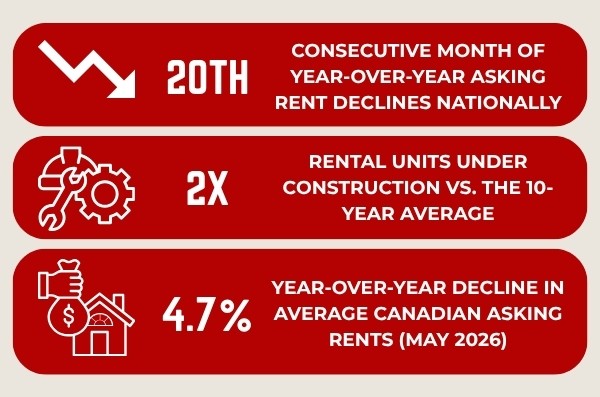
If you’re a landlord, investor (or even a tenant) in Ontario, you’ve probably noticed that the rental market landscape has been rapidly shifting. After several years of soaring rents and limited rental inventory, the Canadian rental market is softening. More rental units are becoming available, asking rents are declining in many major markets, and landlords are finding that properties are taking longer to lease than they did just a year ago, with some even offering incentives just to fill their units. New legislation and updated rent increase guidelines are also adding to these market shifts and changing what landlords need to know heading into 2027.
What This Means For You
Canada’s rental market is becoming more balanced, but not everyone is experiencing it the same way. An increase in new rental supply is creating more choice for renters and easing asking rents in many major markets, particularly in Toronto, Vancouver, Calgary, and Ottawa, where newer, higher-priced rental units are seeing longer vacancy periods. However, affordable rental housing remains in short supply, meaning many renters continue to face affordability challenges, while some landlords are seeing increased competition for tenants.
Interested in learning more? Explore CMHC’s Mid-Year Rental Market Update for a closer look at the data and trends shaping Canada’s rental market.

Ontario’s 2027 Rent Increase Guideline Has Been Announced
At the same time, the Ontario government announced that the 2027 rent increase guideline will be set at 1.9%. For most residential rental units covered by rent control, this is the maximum amount landlords can increase rent in 2027 without approval from the Landlord and Tenant Board. If you own a rental property, it’s important to understand whether your unit is subject to rent control and to plan accordingly for upcoming lease renewals.
Note: In general, rent control applies to residential units first occupied before November 15, 2018, though there are some exceptions.

Another Bill 60 Update for Tenant and Landlord Disputes
As Ontario’s rental market continues to evolve, so do the rules surrounding it. After months of discussion, Bill 60 is beginning to bring some of its proposed changes into focus, including one that could affect how rent arrears cases are handled by the Landlord and Tenant Board.
Under the proposed legislation, tenants who are alleged to be in rent arrears would need to pay 50% of the amount claimed to be owing to the Landlord and Tenant Board before raising other issues during a hearing. The Ontario government says the change is intended to reduce procedural delays and discourage bad-faith claims, while tenant advocates have raised concerns about access to justice for renters with legitimate disputes. Landlords and property managers should continue monitoring when these provisions come into effect.
Quick Tip for Landlords
As of July 1, 2026, Ontario residents can now place a digital lock on their Equifax credit report. If you run credit checks during the tenant screening process, applicants with a credit lock will need to temporarily unlock their file first. A quick note in your application instructions can help prevent delays.

The Bottom Line
Canada’s rental market is entering a new chapter. After years of record-low vacancy rates and rapidly rising rents, conditions are beginning to rebalance… but not evenly. While many renters are gaining more choice, affordable housing remains in high demand. At the same time, landlords and investors are navigating a more competitive leasing environment alongside important regulatory changes, including Ontario’s 2027 rent increase guideline and the ongoing evolution of Bill 60.
Whether you own a single rental property or a growing investment portfolio, understanding both market trends and legislative updates is essential to making informed decisions. Staying ahead of these changes can help you better protect your investment, minimize risk, and confidently plan for the future.
If you have questions about how these updates could affect your rental property, investment strategy, or real estate goals, I’m always happy to help.